THE ORCHID GARDEN
RHS Flower Show Tatton Park 2024
AWARDS
RHS Silver -Gilt Medal
The Orchid Garden brought together two very different landscapes: the misty cloud forests of South America and the back garden of a Macclesfield terraced house. Created for RHS Flower Show Tatton Park 2024, the garden explored the beauty and diversity of orchids while drawing attention to the fragile habitats on which many species depend.
Tropical orchids were displayed within a greenhouse inspired by the plant collections of the Colombian Andes, while British native orchids appeared among wildflowers, stone and naturalistic planting outside. The result was a garden that moved between the exotic and the familiar, showing that remarkable plants can be found both across the world and much closer to home. The Orchid Garden was awarded an RHS Silver-Gilt Medal.
Two landscapes, one garden
The design was imagined as the garden of a modest terraced house on Buxton Road in Macclesfield.
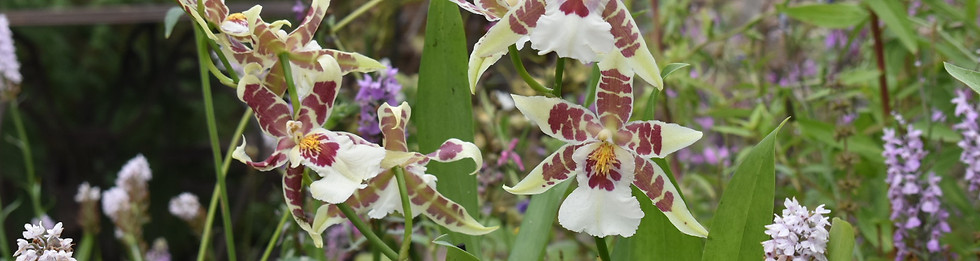
Within this recognisably local setting, a small greenhouse housed tropical orchids including Cattleya, Epidendrum and Oncidium. Beyond it, common spotted orchids and heath spotted orchids grew among British meadow plants.
This contrast allowed the garden to tell a larger story. Orchids are often associated with rare and exotic environments, yet Britain has its own extraordinary native species, many of which are equally dependent on carefully balanced habitats.
Craft and material
Reclaimed stone and York stone paving gave the garden a strong connection to the local landscape. Traditional drystone walling provided structure, shelter and habitat, while also celebrating the skill of regional craftspeople.
The materials were deliberately understated, allowing the planting to take prominence. Their texture and age helped the garden feel settled and grounded, despite the temporary nature of a show build.
A garden about conservation
The Orchid Garden was designed not only to celebrate orchids but to explore the pressures they face.
Habitat loss, climate change and changing land use are placing many orchid species under increasing strain. By presenting tropical and native orchids side by side, the garden encouraged visitors to see conservation as both a global and local responsibility. It was a reminder that even a small domestic garden can become part of a much larger network of habitats.